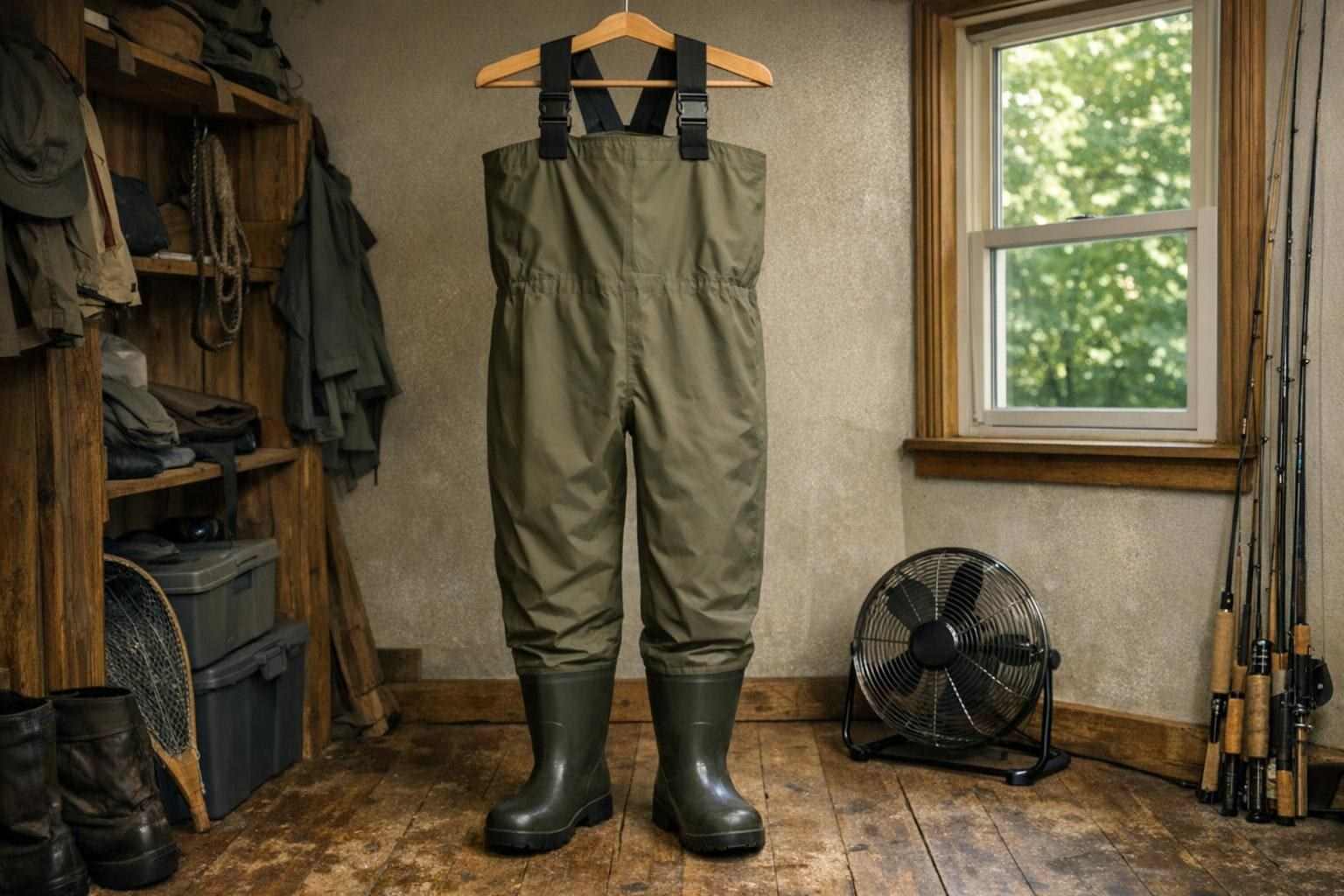
Many wader styles are quickly transformed into a maintenance problem by a wet pair of waders, simply because they are hung up in the same way as a pair of wet socks. The interior needs to be allowed to dry, vulnerable parts inspected for damage, and the gear not stored until completely dry. The following post-hunt clean up exercise illustrates why each of these simple steps are important.
Start with the muddy return, not the drying rack
You pull into your driveway after a long day of chasing waterfowl and look down at your marked legs, muddy boots and wet gloves in your chest pocket. The tempting thing to do is to hang up your waders and leave them for a few days while you go to other things. But remember, those little grits are like sandpaper and will wear out the fabric of your waders, particularly in the folded up areas of the legs. Also, any moist folds in your waders will harbor bacteria that will start to deteriorate the material of your waders.
Start by removing all items from the pockets and detach any items such as leg straps. Use soft brush to remove any dirt from the exterior of the waders. Clean any especially muddy areas with cool or lukewarm water and mild detergent where recommended by the manufacturer. Be sure to avoid scrubbing the taped seams as the dirt can act like fine sandpaper when the waders are folded, packed away etc.
Note that some waterfowl hunting garments require special cleaning solutions that be stipulated on the care label. Using other cleaners such as soaps, shampoos, conditioners, solvents, and other cleaning products can either pull off a water-repellent finish or clog up fabric pores with residue that will attract dirt. So use plain water and gently wipe or rinse away any mud and grime as much as possible, and then allow the garment to dry as usual.
Let gravity and air do the work
In order to open up the upper portion of a pair of waders and allow moisture to escape from the lining it is best to turn it inside out when drying. However, be sure to do this gently in order to avoid pulling on suspenders, attachment points or even delaminating a sealed transition. If the material is resistant to turning inside out then don't force it as you could end up damaging the gear.
Hangers: Choose wide, smooth hangers or drying bars, rather than narrow hooks. Avoid sharp folds in the waders, especially at the waist, shoulder and boot joints. Heavily booted waders are best dried with their legs supported by a broad surface to prevent undue stress on vulnerable joints already flexed during the hunt.
Drying waders out is generally best done in a dry, well-ventilated room, out of direct sunlight and away from heat sources, such as heaters, wood-burning stoves etc. Using a small fan in the room to circulate air can help, but do not place the fan to blow directly against the waders. The garment should be stored opened out to facilitate even drying of both sides of the waders.
Heating up your waders will dry them out faster, yes. But then you run the risk of ruining adhesive, coatings, rubber or seam tape. The natural way of drying waders is best. So let your waders dry naturally in a room at a comfortable temperature, with good airflow.
Protect the places that leak first
Turn clothing inside out when cleaning as dirt will get into the inside of breathable lining. Be careful not to pull or rub dirt into seams when cleaning mud from clothing. Check all seams, especially at flex points for signs of wear, damage, or delamination. Find out if all parts can be dried separately before storing.
Seams are generally most susceptible to damage at repeated-fold points, such as around knee or boot-straps, crotch etc. Check these carefully for any signs of wear, particularly on outer-taped seams. A seam may look fine but for example the tape on an inner seam may have started to come apart. Avoid pulling on any seemingly loose seams or edges as these can often be to break rather than to mend.
Avoid folding up the waders around the boots while they are still wet. This could cause moisture to become trapped between the folds of fabric and the material could become saturated again before it has a chance to dry. The areas where water may have entered the waders could be harder to identify once they have been folded up.
A practical check before storage
It makes for a poor home scenario if, after opening up your waders, you find they still have moisture in them and are even slightly cool to the touch. While the outer layer of your waders may look and feel dry, it is essential to check the inside of them too, including the boot insides, the cuffs of your waders, the corners of your pockets and the areas where your waders are held up by your suspenders.
Buckles, suspenders, zip and boot sole areas must be checked for dirt. Rinse them with water and allow to dry. Cleaning seams and soles for storage must be done very carefully with a soft brush. A sharp tool can easily puncture or even tear breathable materials and may even lift a sealed edge.
Before storing the gear, ask three simple questions:
– Is the inside dry as well as the outside?
– Are the seams and high-flex areas free of visible damage?
– Does the storage location stay cool and dry and is free from sharp objects that could get pressed into the material?
Wait until you have completed all the necessary steps for each issue before storing the gear.
Pack for the next hunt, not the last one
Rugged outdoor gear, like your waders, can get damaged in storage when packed too tightly, or when folded in such a way that severe creases are formed. These types of stresses are best avoided. Store your waders in a dark, dry location and avoid storing them on top of other pieces of gear that could potentially crush them. In your vehicle, avoid storing your waders in hot locations such as on top of the heater, in the trunk of a closed vehicle, or in a shed that may get damp in the winter.
Check the garments at next outing. Look for the defect that you found, test all closures and make sure that any repair products have been applied correctly and have cured where necessary.
Just a few simple considerations need to be undertaken to maintain your wader gear and waterfowl hunting equipment. Rinse down your gear after a hunt to remove any grit that may have got into the seams. Drying your gear using airflow as opposed to heat will also help to extend the life of your garment. Also, ensure that your gear is supported when not in use and give all of the seams a good once over when your gear is clean.