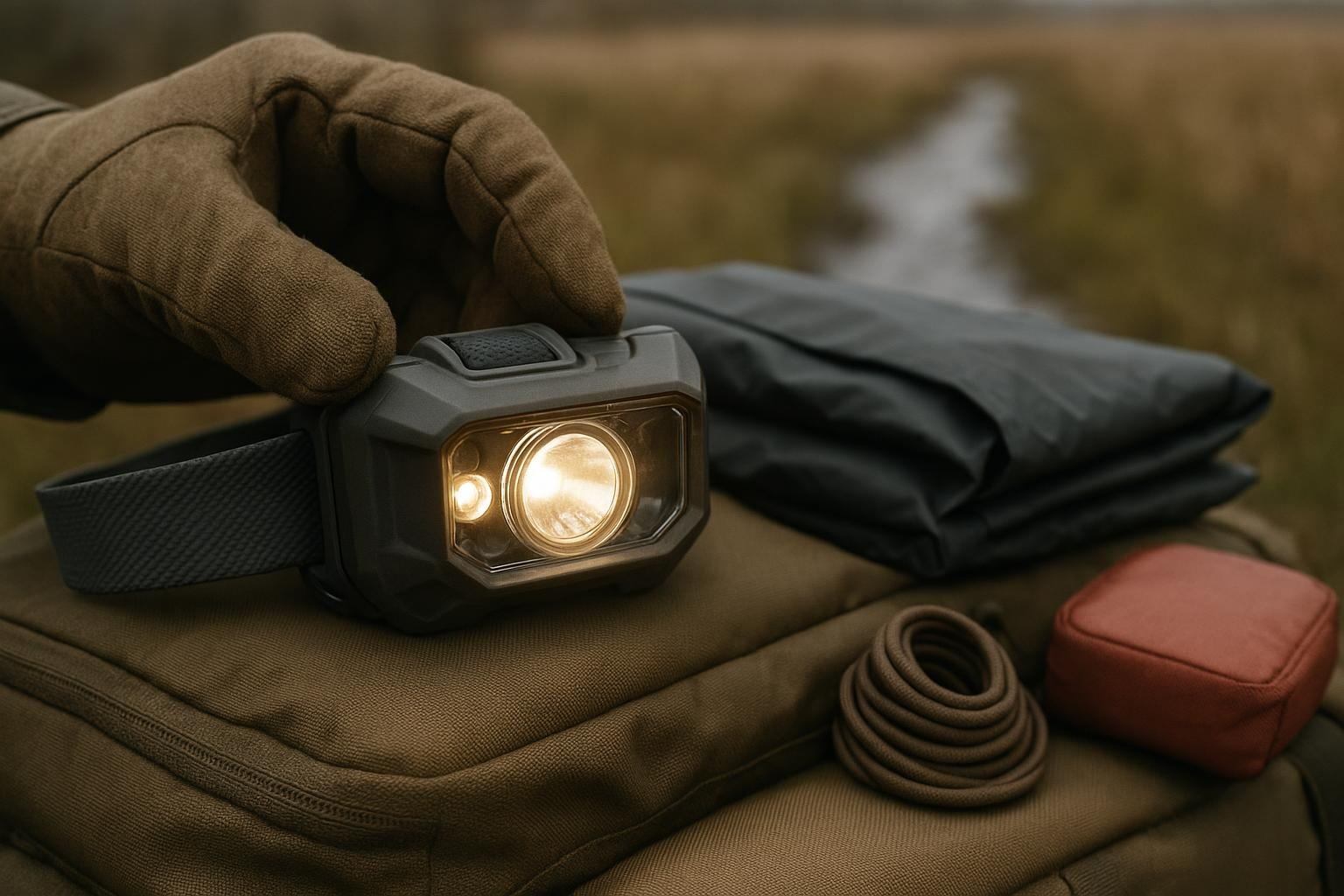
Field preparation often fails at the place: gear that works but has not been checked in a while. A flat headlamp, cracked wader buckle or missing license can cause problems than an imperfect forecast. A useful check is less about buying gear than matching what you carry to the conditions, route, legal requirements and consequences of failure. The goal is a safer day with fewer decisions made after you are cold or tired.
Start with the route, weather and exit plan
Pack for the place you will actually use, not the trip you remember. A short walk over ground requires different footwear and water than a long approach through mud, ice or flooded timber. A boat launch, public marsh, private boundary and remote trail each have failure points.
Check a forecast then consider conditions at ground level. Wind can make a mild temperature feel severe on water. Rain can turn a trail into a recovery problem while fog and darkness can erase landmarks. Leave a trip plan with someone who is not going including the access point, expected return window and what to do if you do not check in.
Plan the exit carefully as the entry. Know which routes remain usable if water rises, where you can safely leave and whether your phone will work there. Downloaded maps help,. They do not replace basic orientation skills or a physical backup when conditions are uncertain.
Inspect equipment that keeps you visible
Clothing failures are rarely dramatic at first. A damp cuff, leaking seam or missing glove can become a cold-hand problem when you need to operate a zipper tie a knot or handle a boat line. Check waders for areas test closures and inspect boot soles for separation. Bring a repair method suited to the material of assuming tape will fix every leak.
Keep the clothing system simple: a moisture managing base layer, insulation that remains useful when damp and an outer layer suited to wind and precipitation. Cotton has limited value as a layer in cold wet conditions because it dries slowly. Pack spare. Socks where they can stay dry not loose at the bottom of a wet bag.
Visibility matters when concealment is part of the activity. Follow requirements for hunter orange or other visible clothing and use a light when traveling in darkness where required or sensible. Do not assume a familiar property has no users; hikers, dog walkers, land managers and other hunters may share the area.
Audit tools by failure not habit
Lay out every item. Ask: What job does it perform? What happens if it fails? Do I have a backup? This quickly exposes gadgets and missing basics.
A headlamp should have working controls, charged power and when darkness is possible a backup light source. Protect your phone from water and cold. Carry a charging option for long outings. A small first-aid kit should address problems such as blisters, minor cuts, stings and basic medication needs. Add prescriptions and do not leave them in a vehicle if the plan depends on carrying them.
For boats check flotation equipment, drain plugs, tie-downs, fuel or battery status and lines before launching. Wear required flotation equipment rather than storing it within reach. In waders know the limits of your setup and the water you are entering. More equipment does not make wading, moving water or unstable ice safe.
Keep knives, firearms and other tools secured and handle them according to their intended use. Never rely on an improvised modification for a safety- item.. Appropriately repair damaged components before leaving.
Confirm details before departure
A valid license is only one part of compliance. Seasons, zones, species limits shooting hours tagging procedures, approved equipment, access permissions and transport rules can differ by location and change after your visit. Waterfowl hunting may also involve species identification, nontoxic shot requirements and special reporting or validation rules depending on the jurisdiction.
Use official guidance from the relevant wildlife agency and read the rules for the exact area, not only the general season summary. Keep documents accessible and confirm that digital versions are accepted where you hunt. If a rule is unclear resolve it before leaving; uncertainty is not permission. An old screenshot, saved webpage or remembered answer is not a substitute for guidance.
Check access well. Public-land boundaries can be. A familiar route may cross private property or a seasonal closure. Respect posted restrictions, parking rules, refuge conditions and landowner requests. A legal opportunity can still be a choice if reaching it causes damage or conflict.
Let ethics shape packing decisions
Outdoor ethics begin before the first call, cast or shot. Carry water, food and basic emergency equipment to handle a delay. Do not take a shot that depends on identification, an unsafe background or a recovery plan you cannot reasonably complete. For waterfowl identify the target and know what lies beyond it; concealment and excitement do not reduce the responsibility to make a decision.
Plan retrieval without damaging habitat. Avoid trampling vegetation widening muddy approaches or driving where the ground cannot support a vehicle. Keep dogs under control, around livestock other users and nesting areas. Pack out shells, food wrappers, tape and broken equipment. Remove another persons litter when doing so does not create a hazard.
A final checklist should be short enough to use beside the vehicle:
– License, permits, identification and current area rules confirmed.
– Route, weather, exit plan and check-in contact shared.
– Clothing, waders, footwear and flotation equipment inspected.
– Light, phone, power, first aid, water and food ready.
– Tools secured handling reviewed and retrieval plan realistic.
– Access, habitat impact and waste plan considered.
The best audit may leave some equipment at home. Expose one item that needs replacing. That is a result. Preparation is not a display of readiness; it is the work that protects people, wildlife, access and the places that make future outings possible.